In today’s rapidly evolving digital economy, the role of the CIO has never been more critical—or more misunderstood. Organizations are under constant pressure to innovate, optimize costs, secure digital assets, and deliver measurable business value from technology investments. Yet, the traditional model of a full-time CIO is increasingly being questioned.
A new model is emerging—one that is leaner, sharper, and outcome-driven.
The future of IT leadership is not full-time. It’s fractional.
The Shift in Enterprise Priorities
Modern businesses, especially in high-growth and cost-conscious environments, are no longer looking for technology leadership that is confined to operational oversight. They need strategic partners who can:
- Align technology with business outcomes
- Accelerate digital transformation initiatives
- Optimize IT spend without compromising innovation
- Bring in cross-industry expertise and proven frameworks
However, hiring a full-time CIO often comes with significant overhead—high fixed costs, limited flexibility, and in many cases, a mismatch between capability and actual organizational need.
This is where the Fractional CIO model is redefining the game.
What is a Fractional CIO?
A Fractional CIO is a seasoned technology leader who engages with organizations on a part-time, contractual, or outcome-based model. Unlike traditional roles, the focus is not on “presence” but on impact.
This model provides access to top-tier strategic leadership without the burden of full-time costs—bringing in precision, agility, and measurable outcomes.
Why Fractional is the Future
1. Cost Efficiency Without Compromise
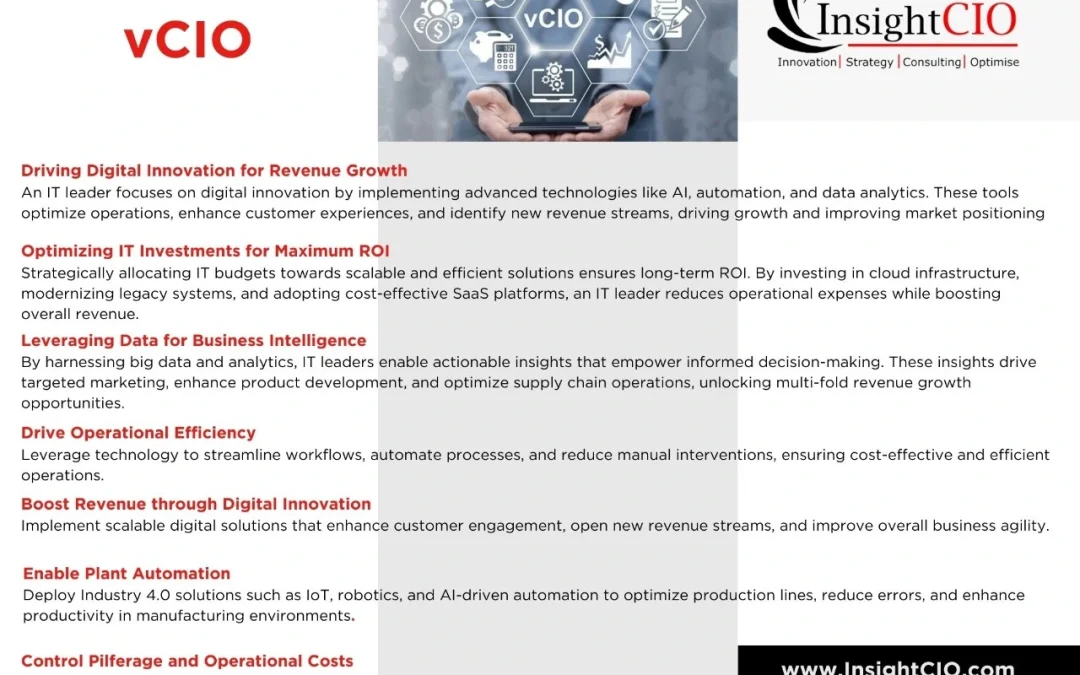
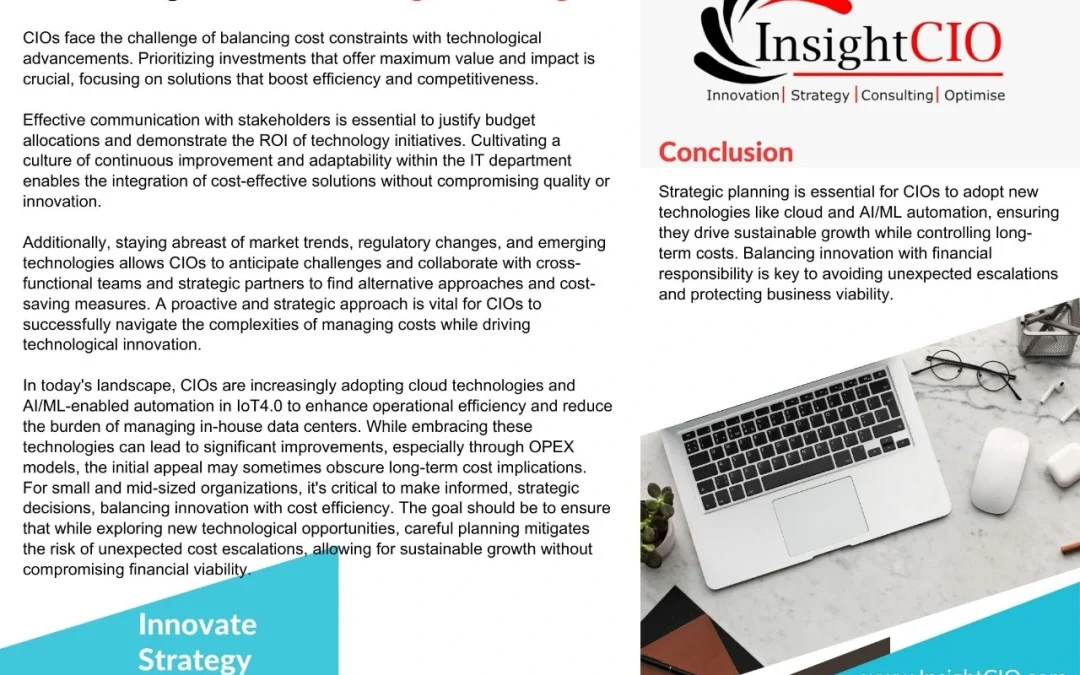
Organizations can reduce IT leadership costs by 40–60% while still gaining access to highly experienced CIO-level expertise. This allows businesses to reallocate budgets toward innovation, automation, and growth initiatives.
2. Outcome-Driven Engagement
Fractional CIOs are not tied to internal politics or legacy systems. Their mandate is clear—deliver results. Whether it’s cost optimization, digital transformation, or technology modernization, the focus remains on measurable business impact.
3. Access to a Broader Ecosystem
A strong Fractional CIO doesn’t operate alone. They bring with them a network of specialists—architects, cybersecurity experts, cloud professionals, and transformation leaders—ensuring that every challenge is addressed with the right expertise.
4. Agility and Speed
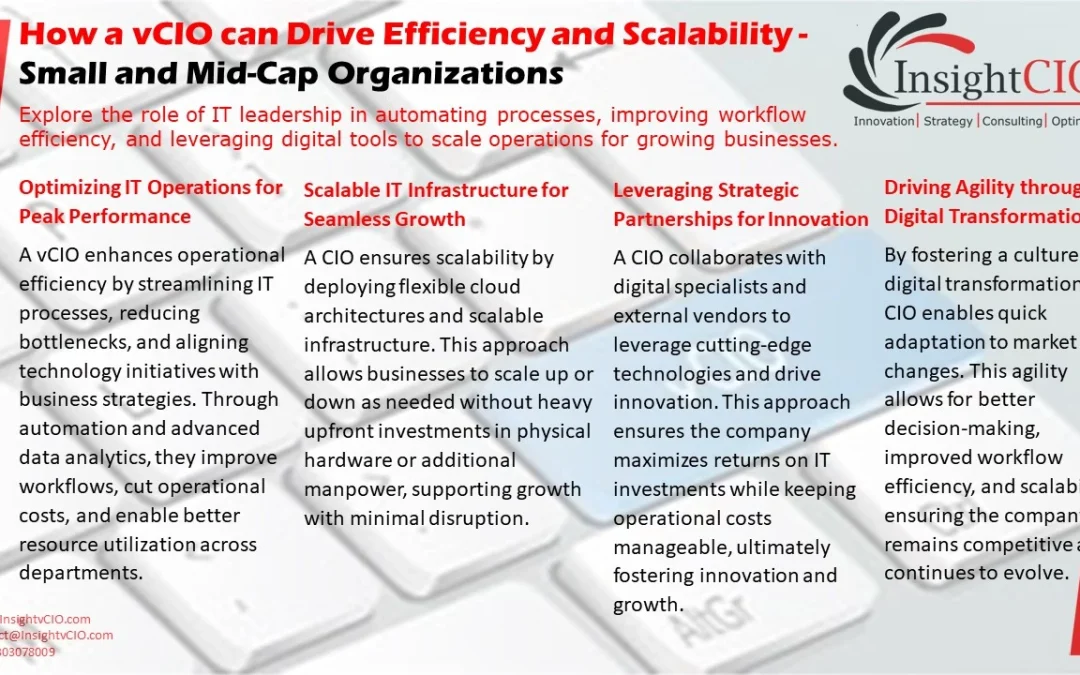
In a world where technology cycles are shrinking, agility is critical. Fractional CIOs enable faster decision-making, quicker execution, and the ability to pivot strategies without long-term constraints.
5. Unbiased Strategic Perspective
Being external yet deeply embedded, a Fractional CIO offers an objective viewpoint—free from internal biases. This often leads to sharper decisions, better vendor negotiations, and more effective governance.
Who Needs a Fractional CIO?
The model is particularly powerful for:
- Mid-sized enterprises looking to scale without inflating leadership costs
- Startups and growth companies needing strategic direction without full-time overhead
- Organizations undergoing transformation—ERP, cloud, cybersecurity, or cost restructuring
- Companies facing IT inefficiencies and looking for rapid optimization
From Cost Center to Value Creator
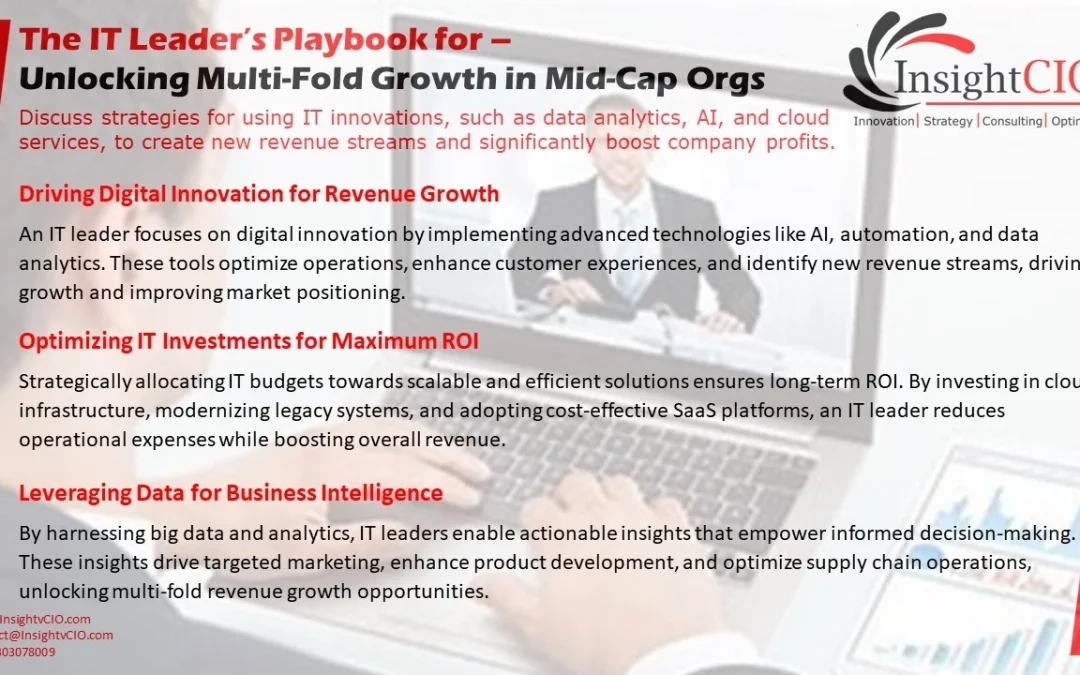
One of the most significant shifts enabled by the Fractional CIO model is the transformation of IT from a cost center to a value driver.
By focusing on:
- Technology rationalization
- Vendor consolidation
- Automation and AI-led efficiencies
- Strategic roadmap alignment
organizations can achieve 30–50% savings in IT spend while simultaneously improving performance, scalability, and resilience.
The Leadership Mindset Shift
Adopting a Fractional CIO is not just a structural change—it’s a mindset shift.
It requires organizations to move from:
- Ownership → Outcomes
- Presence → Performance
- Fixed Cost → Variable Value
This shift is essential for businesses that want to remain competitive in an increasingly digital-first world.
The Road Ahead
As enterprises continue to navigate uncertainty, disruption, and rapid technological change, the demand for flexible, high-impact leadership will only grow.
The question is no longer whether organizations can afford a full-time CIO.
The real question is—can they afford not to adopt a smarter, more agile model?
Final Thought
The Fractional CIO is not a compromise. It is an evolution.
It represents a future where leadership is defined not by time spent, but by value delivered.
And in that future, the most successful organizations will be those that choose precision over presence, agility over rigidity, and outcomes over tradition.
The future of IT leadership is here. And it’s fractional.